

The Greater Manchester Cancer Alliance is committed to ensuring good quality holistic needs assessments and care plans are available to all cancer patients and will support Trusts to accurately report activity through COSD as required nationally.
Please watch the video alongside which explains what can be expected from a Holistic Needs Assessment offered to people who are diagnosed with cancer. A Holistic Needs Assessment (HNA) is given after diagnosis and at key points in treatment. This video was produced collaboratively by colleagues at the Northern Care Alliance and hosted centrally by South East London Cancer Alliance. HNA explained: Personalised Care and Support Planning for people diagnosed with cancer – Cancer Care Map
Holistic Needs Assessments (HNAs)
A Holistic Needs Assessment, often called an HNA, is a conversation between you and a healthcare professional about your needs, worries, and concerns during or after cancer treatment. It gives you dedicated time to talk about any physical, emotional, practical, financial, or social issues you may be experiencing.
The aim of an HNA is to make sure you feel supported, understood, and connected to the right services. Together, you will create a personalised care plan that focuses on what matters most to you.
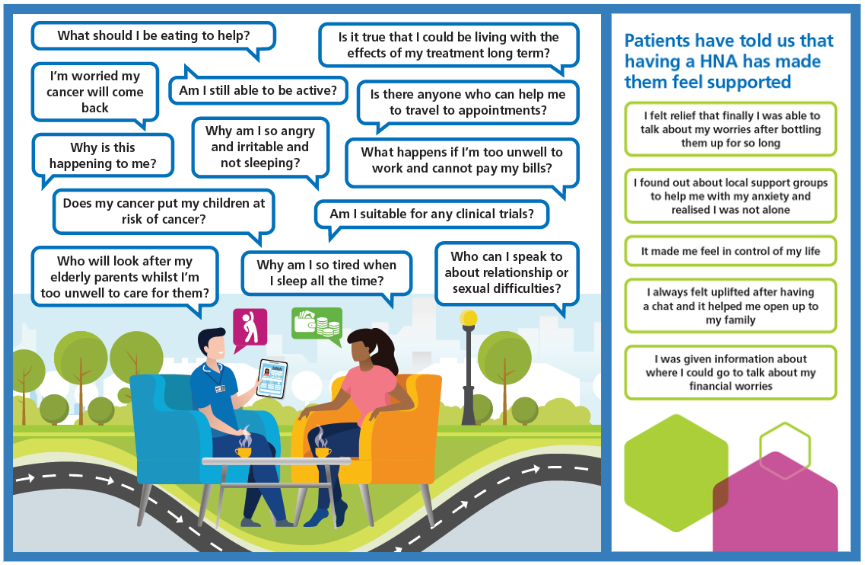
During an HNA, you can talk about anything you feel is affecting your wellbeing, such as:
• Concerns about your cancer coming back
• Sleep problems, tiredness, or difficulty managing day-to-day
• Anxiety, low mood, or not feeling like yourself
• Worries about your children, partner, or caring responsibilities
• Managing symptoms or side effects from treatment
• Questions about eating well, being active, or long‑term health
• Practical issues like work, travel to appointments, or paying bills
• Relationship or sexual difficulties
• Whether clinical trials or other support options are available
You do not need to prepare anything in advance—this is simply a space for you to talk openly about what you are experiencing.
How can an HNA help?
Patients who have had an HNA often say it helped them feel:
• Relieved to finally share worries they had kept to themselves
• More in control of their situation
• Connected to local support groups and services
• More able to talk to family and loved ones
• Better informed about practical or financial support
Personalised care and Support Plans (PCSP)
- A Personalised Care and Support Plan (PCSP)is developed after the Holistic Needs Assessment to keep a record of conversations, decisions and agreed outcomes
- A PCSP ensures people’s physical, practical, emotional and social needs are identified and addressed at the earliest opportunity.
- A CNS/Support worker will not have all the answers to patients questions but can signpost to organisations that do. These should be detailed in the plan.
- The plan should be reviewed over time
Document Library
Here’s a video by Macmillan which explains the benefits of HNAs for both the patient and care team