

A Greater Manchester mum-of-two is urging women not to ignore changes to their bodies and seek medical advice if something doesn’t feel right after successfully being treated for a rare gynaecological cancer.
Kathy Morse, 59, from Walkden, Salford, was diagnosed with vaginal cancer in December 2020 after initially feeling dizzy and then noticing a small internal lump in her vagina.
Follow up tests including a surgical biopsy of the lump, led to her diagnosis.
Kathy was treated with surgery to remove the cancer, reconstruction and lymph node removal. She also had chemotherapy and radiotherapy and is now doing well. She volunteers as a patient representative on the Greater Manchester Cancer Alliance’s Cancer Voices Community helping to improve cancer care by sharing her experiences.
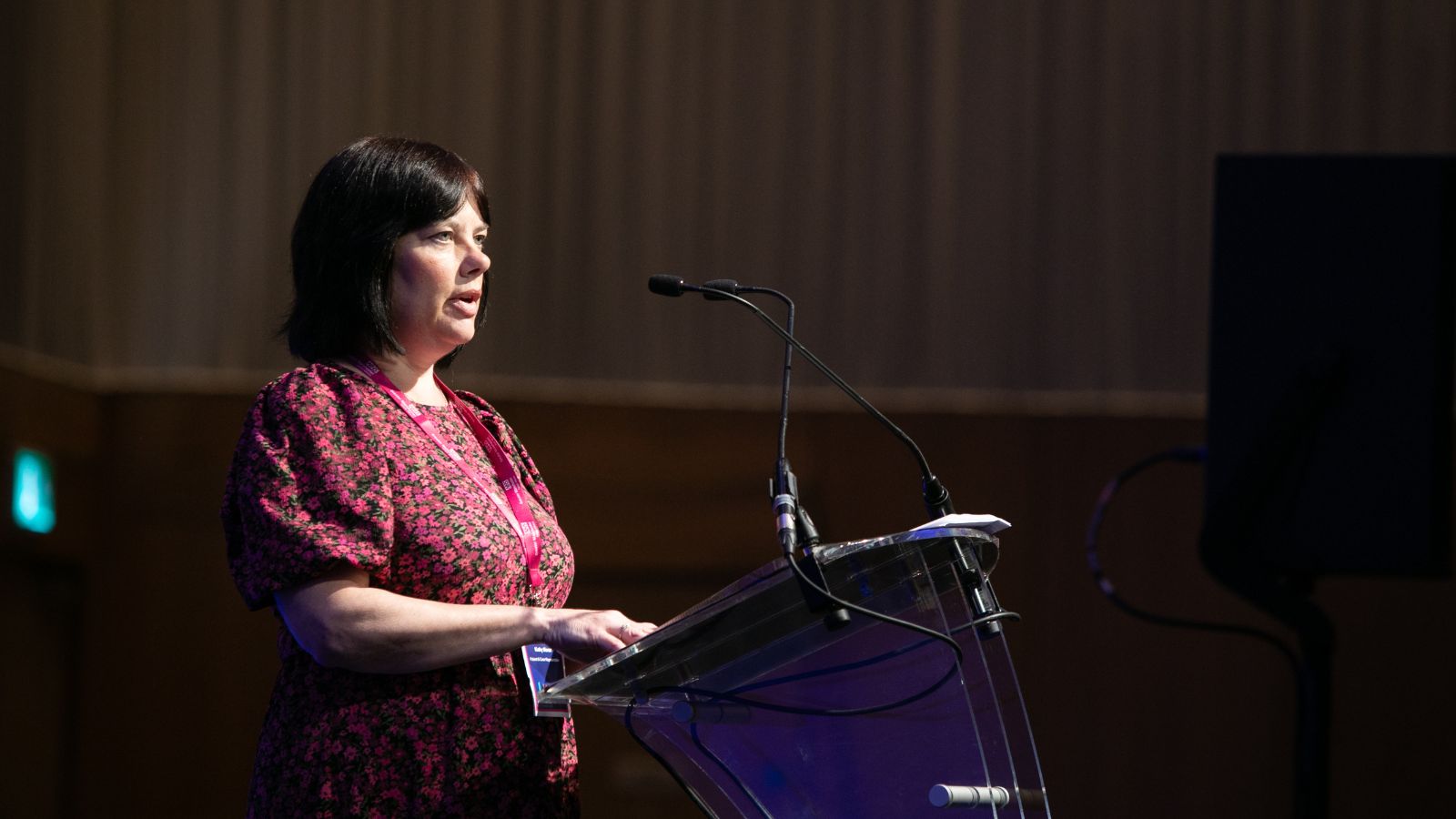
Kathy Morse on stage at the Greater Manchester Cancer Conference sharing her story to delegates
This Gynaecological Cancer Awareness Month Kathy wants to encourage other women to listen to their bodies and get any new symptoms checked out.
She said: “I had never heard of this type of cancer so I’ve made it my mission to speak openly about it.
“It’s so important to be aware of changes to your body and not ignore new symptoms.
“I wouldn’t be here to campaign if I had ignored initial symptoms.”
“So my message is trust your instincts and don’t delay getting checked.”
Gynaecological cancers include ovarian, cervical, womb, vulval and vaginal cancers.
Kathy was already health conscious before her diagnosis, but she now does as much aquafit as possible to help manage pain and stay active.

Dr Richard Edmondson, Clinical Lead for Gynaecological Cancers at Greater Manchester Cancer Alliance
Dr Richard Edmondson, Clinical Lead for Gynaecological Cancers at Greater Manchester Cancer Alliance, said: “We’d like to thank Kathy for sharing her story and all the work she does for the Alliance. As Kathy’s story shows it’s really important if you notice anything unusual or have symptoms that are worrying you, please speak to your GP. In most cases, it won’t be cancer, but if it is, finding it early can make it more treatable.